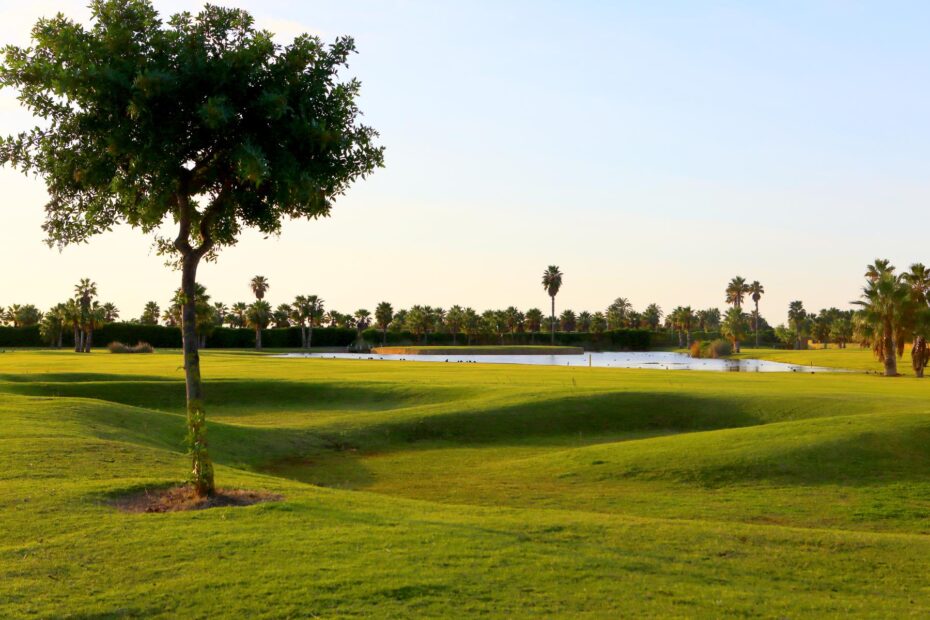
On 17 September, a product manager at a Stockholm tour operator signed a 2027 contract for a golf resort in southern Spain and sent it back with a short list underneath. Two of the questions were about golf course overseeding in Spain: which weeks the course reseeds, and when buggies are restricted.
She already had the rates. She did not ask about price at all.
The hotel answered a week later, apologising for the delay, and passed the golf questions to the club. The club passed them to me. She had everything in one email the next morning, and her reply was two lines long.
Most operators never ask the overseeding question when they load a destination. It rarely costs them anything in the first year. It usually costs them in October of the second.
Why golf course overseeding in Spain lands on your best selling weeks
The calendar problem fits in one paragraph.
Scandinavian, Dutch and German golfers come to southern Spain in two windows: spring, and the autumn weeks after their own season ends. The British shoulder season looks similar. Those autumn weeks, late September through October, are also when most courses on the Spanish coast overseed their fairways and hollow-tine their greens. Some repeat the greens work in spring.
So the busiest weeks for a Nordic golf programme sit on top of the busiest weeks for the greenkeeper.
That is not a flaw in the destination. Every warm-climate golf region in Europe does it, because a course that is not overseeded in autumn is a course that looks tired in February. It is simply a date that has to be in your contracting file, and in most files it is not.
The course does not close, and that is the trap
If the course closed, you would know. The booking engine would refuse the tee time and you would move the group.
During overseeding the course stays open. The tee time confirms. The hotel confirms. The confirmation goes to the client, and nobody in the chain has said anything untrue.
Then the group reaches the first tee and finds freshly cored greens, sanded and slow. Or fairways where the new seed has not taken yet, with a note in the pro shop about preferred lies and mats.
The booking was correct. The week was wrong.
And the complaint does not go to the club. It goes to the operator whose name is on the documents, who then spends part of the following spring explaining to a returning client why this year it will be different.
The dates are not on the club website. They are not on the hotel website either. Each club sets its own weeks, and they can move from one year to the next depending on weather and the greenkeeper’s plan. You find out by asking, or by working with someone who talks to the club all year and puts the dates in writing when you fix yours.
Buggy restrictions: the question behind the question
Her second golf question was about periods when buggy use is restricted, and it is the natural partner of the first.
While new seed is germinating, many Spanish courses keep buggies on the paths, sometimes for a week or two. After heavy rain, the same rule can apply for a day or three.
For a group of thirty-year-olds, cart path only is a detail. For a society of members in their sixties who chose the trip because the buggy was included in the package, it can mean the difference between playing eighteen holes and playing nine. It is also the kind of thing that turns up in the post-trip survey with a very specific adjective attached.
Asked early, it gives you two options. Move the group a week if the dates allow. Or say it in the itinerary, with the reason, so the client arrives knowing what to expect. Written notice before travel reads as local knowledge. The same information at the first tee reads as a problem.
What a Nordic product manager puts on the list before loading 2027
September is when 2027 gets built. In one week this month I had requests from a UK operator for Cadiz in February and March 2027, a London operator with a large group for Madrid in September 2027, a Canadian agency with an April 2027 group for Panama, and the Stockholm product team loading Playa Granada. Nobody asked for this November. That is already sold, or already lost.
Her full list was short, and I have kept it because it is the most useful loading checklist I have seen this year:
Factsheets for the hotel and the course, plus high-resolution images, with a GIATA code or a gallery she could download from. A destination loaded with a stock sea photo does not sell.
The golf-view room supplement, which was missing from the rate table. It is the exact question a client asks on the second call, once they have decided to go and start picturing the balcony.
Overseeding periods.
Buggy restrictions.
Not one line about price. All four lines about what happens on the day the client arrives.
Put next to what I have seen go wrong in the last few seasons, it becomes the eight-line file I now send with every destination loaded for the following year:
1. Rates for the right year. The document says 2027 and the prices inside are 2027. It sounds obvious. It does not always match.
2. Factsheets for hotel and course, with room count, real distances to the first tee and what there is for non-golfers.
3. High-resolution images with usage rights. A downloadable gallery or a GIATA code.
4. The supplements that are not in the table. Golf view, single room, the extra night before or after the programme.
5. Course maintenance weeks. Overseeding, greens coring, sanding. Specific weeks, in writing.
6. Buggy policy. When it is paths only, when it is restricted, and what happens if it rains the night before.
7. One name for the course and one for the hotel. Or a single contact who answers for both.
8. The operator’s loading deadline. Theirs, not the destination’s. Knowing which week the programme closes, and sending everything before it.
With all eight in the file in September, the destination goes live. With line five missing it goes live too, and the problem arrives a year later with the group already on site.
How the dates change the way you package autumn
Knowing the maintenance weeks does not mean dropping October. October on the Costa Tropical is warm, quiet and very sellable. What changes is that the programme gets built with the calendar on the desk. Four things I see the better operators do with it.
They build around the weeks, not through them. If a course overseeds in the second half of October, the first half is prime and the week after is often excellent, with greens recovering fast in the warmth.
They lean on the second course. Two courses a short walk apart are not only a sales line. When one is under maintenance, the other usually is not, and the group can play most rounds on the one in best condition.
They put it in writing both ways. The dates in their contracting file, and a line in the client itinerary for any group travelling near those weeks.
They reconfirm in summer. Maintenance weeks set in the winter can move. A quick check in July, before autumn departures, costs one email.
Where Playa Granada fits in a 2027 programme
This is the resort the Stockholm team loaded, so the specifics are useful.
The Playa Granada course sits next to a resort of around 300 rooms, which means a group of sixty stays in one place and eats together. Los Moriscos is about five minutes on foot, bag on shoulder, which is the two-course answer above without a transfer in between. Granada and Malaga airports are both in range, so when one route prices badly you quote the other without rebuilding the programme. The Playa Granada travel guide has the images, texts and FAQs in one place.
It suits the operator whose clients already know the Costa del Sol and want the same season, the same flights and a different coast. I wrote more about that in golf holidays in Andalucia beyond the Costa del Sol, and about the real supplier count on that coast in this piece for tour operators.
Back to Stockholm
What I liked about that email, and I mean it, is the order of priorities.
Overseeding and buggy rules usually surface through a client, after the trip. She wanted both in her file before the destination went live on her website. That is someone who has stood behind a group once and does not intend to stand behind a second one for something that could have been known in September.
The overseeding question does not make the package cheaper or the brochure prettier. It makes the October client come back.
And a destination clients come back to stays in the 2028 programme without anyone having to argue for it again.
If you are loading your 2027 golf programme now
Email me at info@globalhemisphere.com and I will send you the Playa Granada 2027 pack in one go: factsheets, high-resolution images, ready-to-publish texts, and the course maintenance weeks, which I get from the club for you. The same pack Stockholm received, without having to ask three times.
Rates are quoted for your dates, your group size and your tee times. Send me those three and you will have it.
Free resource for travel agents
The 7-point checklist to fill a golf group
The same one I use with groups at Casa de Campo®, Madrid, Panama, Lanzarote and Playa Granada. PDF, straight to the point.
No spam. Only resources that help you sell more golf.